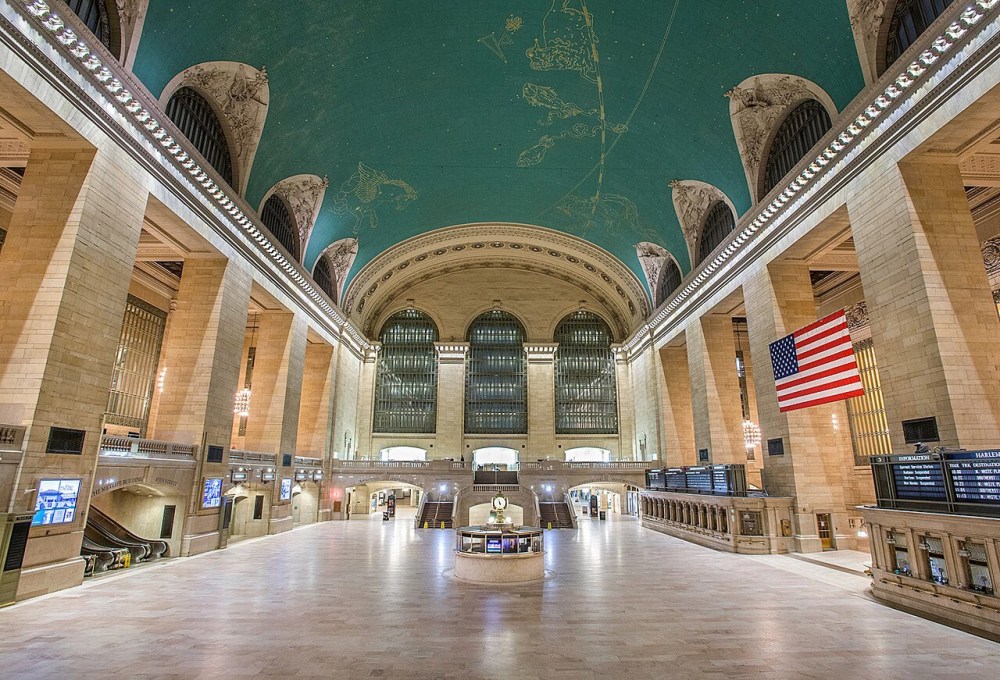
Grand Central Terminal is a commuter rail terminal located at 42nd Street and Park Avenue in Midtown Manhattan, New York City.
Grand Central Terminal is one of the world’s ten most visited tourist attractions. Opened in 1913, the terminal was built on the site of two similarly named predecessor stations, the first of which dates to 1871. As train traffic increased in the late 1890s and early 1900s, so did the problems of smoke and soot produced by steam locomotives in the Park Avenue Tunnel, the only approach to the station. This contributed to a crash on January 8, 1902. Shortly afterward, the New York state legislature passed a law to ban all steam trains in Manhattan by 1908. The old Grand Central Depot then Grand Central Station was replaced with the current Grand Central Terminal, where electrified trains and tracks in tunnels was the preferred option. It was to be the biggest terminal in the world, both in the size of the building and in the number of tracks. Grand Central has 44 platforms, more than any other railroad station in the world. Its platforms, all below ground, serve 30 tracks on the upper level and 26 on the lower. Currently, 43 tracks are in use for passenger service; two dozen more serve as a rail yard and sidings. Another eight tracks and four platforms are being built on two new levels deep underneath the existing station as part of East Side Access.
Interesting Facts regarding Grand Central Terminal
- Trains use to travel through Grand Central towards southern Manhattan – however now, when the third and final Grand Central was built, it became the final stop—all railroad lines terminated at 42nd Street—making it a “terminal” not a “station,”
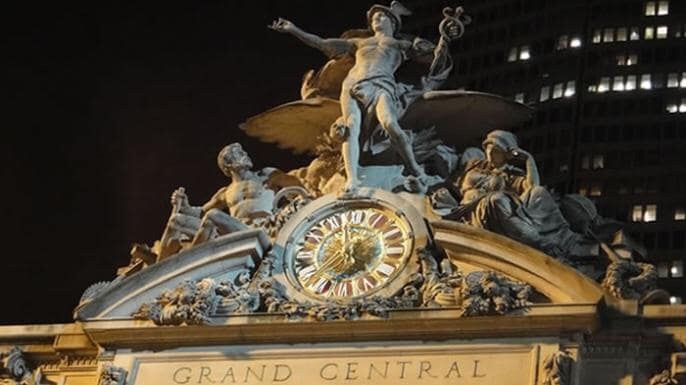
- There are two valuable clocks at Grand Central. Outside, on the station’s façade, is the largest Tiffany clock. It is surrounded by a statue depicting the Roman gods Mercury, Hermes, and Minerva. Inside the main hall, the four-sided ball clock that sits atop the information kiosk is worth an estimated $10 million. Its four faces are made of opal set in brass.
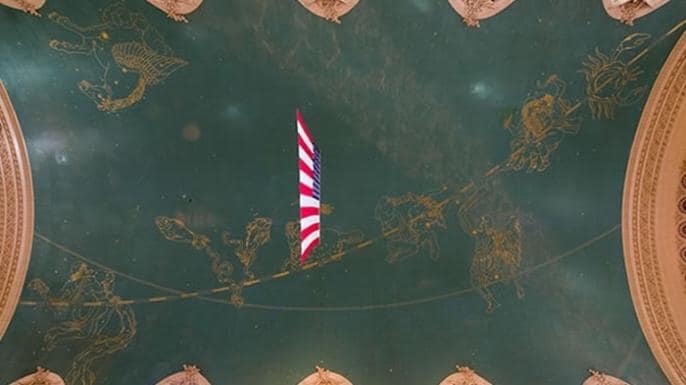
- The constellation ceiling is backwards. In the main concourse, the ceiling was originally meant to be a skylight, but when time and money started to run out, artist Paul Helleu came in to design the fantastical mural instead. A Columbia University astronomer confirmed the artist’s design for accuracy, but it turns out the painters put the plans on the floor while they worked, which resulted in the constellations being painted in reverse.
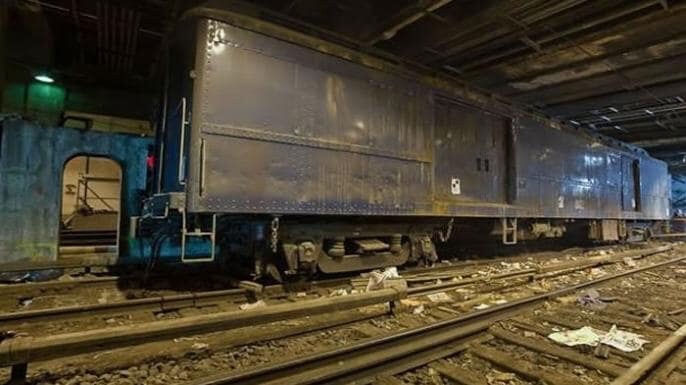
- Grand Central’ s Track 61. President Franklin Roosevelt utilized a secret rail line, Track 61, which provided an underground connection between Grand Central and the nearby Waldorf-Astoria hotel. There was even a large freight elevator at the Waldorf’s end of the track, big enough to fit the president’s Pierce Arrow limousine, which allowed him to travel to and from New York in secrecy.
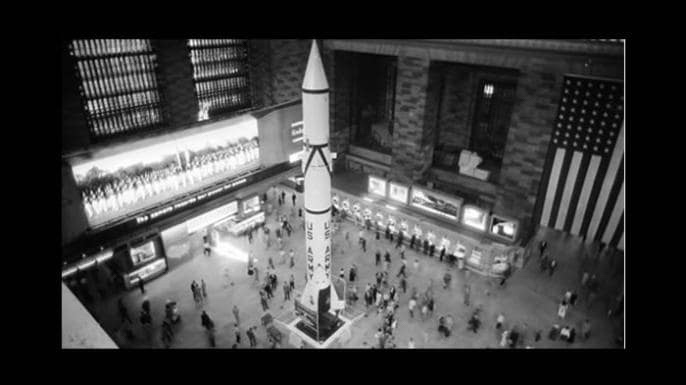
- A rocket once left a hole in the Grand Central ceiling. After the Soviet Union became the first nation to enter space with the launch of their Sputnik satellite in 1957, Americans grew concerned that the communists had taken the technological lead in the race to be the world’s superpower. When the Redstone rocket was first hoisted into position, it pierced a hole in the ceiling, just above the depiction of Pisces. It was insisted that the hole remain as a reminder of the troubled era.

 East Coast of America Science Tour